Office Relocation Services in France
Moving your business with confidence across France

If you are planning a workplace move, you already know that relocating an office is very different from moving a home. Office Relocation Services in France need to take into account tight city streets, building access rules, lift reservations, loading bays, parking restrictions, and the pressure to keep business downtime as low as possible. Whether you are transferring a small team, a growing start-up, a professional practice, or a larger corporate department, the right moving support can make the entire process feel far more manageable.
In France, office moves often involve a mix of practical and logistical challenges. Parisian business districts can have limited access for larger vehicles, while offices in Lyon, Marseille, Lille, Toulouse, Bordeaux, Nantes, Nice, Strasbourg, and many surrounding towns may face shared building entrances, narrow roads, or time windows set by property managers. A local team understands these realities and plans accordingly, helping companies move equipment, furniture, archives, and IT assets in an organised way.
Choosing a professional office moving service is not only about transport. It is about planning, coordination, protection of assets, and continuity for your staff and clients. A well-run relocation service can support you from the initial survey through to the final setup, making the move smoother for everyone involved. If your business is preparing for an upcoming relocation, this is the right moment to request a free quote and start building a plan that matches your schedule.
Why businesses in France choose local office movers
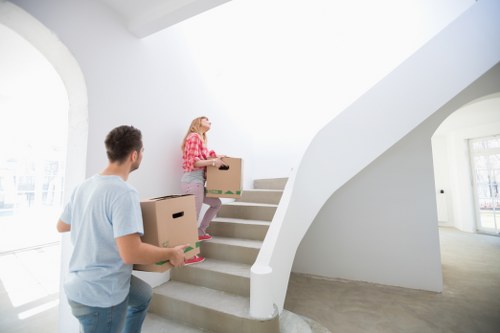
Local knowledge makes a real difference when moving offices in France. A team that regularly works in your region will know how to organise access for commercial buildings, when certain streets become harder to use, and how to handle city-centre restrictions. This matters whether your office is in a glass-fronted building in La Défense, a renovated townhouse in central Lyon, a business park outside Toulouse, or a shared workspace near Marseille’s waterfront districts.
Many businesses also appreciate the flexibility that comes with a nearby moving team. Local crews can often carry out pre-move surveys more easily, coordinate closely with building managers, and adapt when deadlines change. If you need to move outside standard hours, reduce disruption during the working week, or organise a staged relocation over several days, a nearby service provider is usually better placed to respond quickly and practically.
Another important advantage is familiarity with different types of premises. In France, office spaces can range from modern open-plan floors and co-working spaces to heritage buildings with limited lift access and protected staircases. Local office relocation services are used to managing these environments and can suggest the right packing methods, vehicle sizes, and timing strategy for the site. This kind of experience helps protect your equipment and keeps the move on schedule.
What office relocation services can include

Every move is different, but most office relocation services in France are built around a core set of practical tasks. Depending on the size of your company and the complexity of the relocation, your service may include the following:
- Initial site visit and move planning
- Detailed inventory of furniture, files, and equipment
- Packing and labelling of office contents
- Disassembly and reassembly of desks, shelving, and meeting tables
- Protection for IT equipment, monitors, and peripherals
- Secure handling of documents and archives
- Transport using suitable vehicles for urban or regional access
- Unloading and placement at the destination premises
- Waste removal or disposal of unwanted items where agreed
- Support for phased moves or weekend relocation schedules
Some companies also request help with specialised tasks such as moving filing systems, relocating laboratory-style office equipment, handling sensitive records, or transferring reception areas and client-facing spaces with care. If you are moving from a modern office tower, a converted industrial space, or a building with restricted freight access, the service may need to be tailored to the property conditions and the building’s rules.
It is worth discussing your exact needs early. A good move plan will clarify what is included, what needs to be prepared internally, and what additional services may be useful. That way, there are fewer surprises on moving day and everyone knows what to expect.
How an office move is usually organised

A successful business relocation usually starts with a structured planning stage. The aim is to understand the volume of items being moved, the layout of both sites, the access conditions, and the times when the building can be used. For many offices in France, especially those in central districts, the route from the street to the office floor is just as important as the journey between addresses.
The first step often involves a survey or consultation. During this stage, the moving team looks at furniture, IT hardware, storage areas, fragile items, and the practical challenges of the building. They may ask about lift dimensions, loading restrictions, parking, permits, security procedures, and whether there is shared access with other companies. This information helps create a realistic move schedule and avoids delays later on.
Once the plan is confirmed, packing and labelling can begin. Many companies choose to pack department by department, floor by floor, or workstation by workstation. This makes unpacking easier and reduces confusion at the destination. Clear labels, colour coding, and room-by-room organisation are especially useful when multiple teams are moving at once or when a company is splitting operations across more than one site.
Preparation checklist for a smoother relocation

Preparation is one of the biggest factors in a smooth office move. Even the most experienced movers need accurate information and clear internal coordination. The checklist below can help your team get ready in a practical way.
Before moving day
- Confirm the move date and preferred time window.
- Notify building management at both addresses.
- Check access routes, lift bookings, and parking arrangements.
- Identify sensitive equipment and confidential files.
- Back up essential digital data before unplugging devices.
- Assign internal move coordinators or department contacts.
- Label boxes clearly by team, room, or workstation.
- Set aside items that staff will carry personally, if needed.
- Decide what should be moved, stored, recycled, or disposed of.
For businesses with a large amount of paperwork, it may be worth reviewing archive storage before the move. Offices in France often have accumulated files, compliance records, and legacy documents that no longer need to travel to the new site. Reducing volume in advance can save time and help the new office feel more organised from day one.
It is also useful to think about the first day in the new premises. What must be ready immediately? Which desks, phones, printers, and meeting rooms are essential? Which departments need to be operational first? A good relocation plan will prioritise these details so your team can return to work as quickly as possible.
Office relocations for different types of customers
Office relocation services in France are used by a wide range of customers, from independent professionals to large organisations. The type of support needed can vary significantly depending on the size of the team, the nature of the business, and the layout of the property.
Commercial customers
Commercial moves often involve departments, workstations, shared storage, meeting furniture, and IT networks. Businesses may need help moving across the same town, across a metro area, or between cities. In places such as Paris, Lille, Lyon, and Marseille, commercial relocations can also require careful planning around traffic, building access, and loading restrictions. Some companies need a single overnight move, while others prefer a phased schedule to reduce interruption.
Residential professionals and home offices
Not every relocation is a full corporate move. Consultants, therapists, accountants, architects, and freelancers sometimes work from home or from a small private office and need help transferring desks, screens, printers, documents, and client files. In France, many home-based professionals use shared residential buildings or mixed-use properties, which can make access and parking important considerations. A local service can help move these items safely without creating disruption for neighbours or building occupants.
Start-ups and growing teams
Fast-growing teams often need to move at short notice, especially when taking on more staff or upgrading from flexible workspace to a dedicated office. For these clients, the ability to adapt quickly matters. The move may involve modular furniture, light assembly, new storage layouts, and the transfer of a small but important tech set-up. Flexibility and speed are often just as important as transport.
Common access and parking challenges in France
City-centre restrictions
Office moves in France frequently involve city-centre properties where parking is limited and delivery access is closely managed. In older districts, streets may be narrow or one-way, and larger vans or lorries may need to be positioned carefully to avoid blocking traffic. This is especially relevant in busy areas where there are shops, cafés, apartments, and office buildings all sharing the same road.
Building rules and time slots
Many office buildings, business centres, and managed properties set specific time windows for deliveries or removals. Lift bookings may be required in advance, and the move may need to be coordinated with concierge staff or building management. In some cases, protective coverings for floors, walls, and lifts may also be necessary. An experienced office moving service will factor these requirements into the plan from the start.
Regional and suburban access
Outside the major city cores, the challenge may be less about traffic and more about access roads, industrial zones, or shared business parks. In suburban areas around Paris, Lyon, Nantes, or Bordeaux, office buildings may have better loading access but still require careful timing, especially where multiple companies are operating in the same complex. Planning the route and vehicle size correctly can make a noticeable difference to the speed of the relocation.
Moving furniture, IT equipment, and sensitive materials
Office furniture
Desks, chairs, cabinets, conference tables, and reception furniture often form the largest part of the move. Some items can be transported as they are, while others may need to be dismantled for easier handling. Reassembly at the destination is especially useful when the new office has a different floor plan or smaller access points.
IT and electronics
Computers, monitors, printers, docking stations, routers, and servers require a more careful approach. These items can be fragile and may be essential to business continuity. A good moving team will use appropriate packing materials and handle electronics in a way that reduces the risk of damage during transit. It is also important for the business to manage data security, cable labelling, and back-up procedures before unplugging equipment.
Files and confidential documents
Many offices still rely on paper archives, especially in legal, financial, medical, and administrative settings. These items need discreet handling and clear organisation. If your business is moving files, it helps to pack them by department or date range and decide in advance which documents should remain immediately accessible after the move. Confidential materials should always be treated with care and transported securely.
Special handling requirements
Some office relocations involve artwork, presentation screens, specialist cabinetry, or items with unusual dimensions. Others may include sensitive filing systems, laboratory-style desks, or equipment that cannot be turned on its side. If your workplace has unique items, mention them early so the moving team can prepare the right protection and handling method.
What affects the cost of office relocation services in France?
Main pricing factors
Customers often want to understand what shapes the cost of an office move. While exact pricing depends on the project, several common factors influence the overall estimate:
- The size of the office and the number of items to move
- The distance between the old and new premises
- The complexity of access, parking, and building rules
- Whether packing and unpacking are included
- The need for dismantling and reassembly
- The presence of fragile, bulky, or specialist items
- The timing of the move, including evenings or weekends
- Whether storage, disposal, or phased relocation is required
In practical terms, a straightforward move between two accessible offices may be simpler than a relocation involving a high floor, limited lift access, and strict loading times. Similarly, a move within one French city can be less demanding than a transfer between regions, particularly if the route requires careful coordination or longer travel time.
Asking for a detailed quote helps you compare service levels fairly. It also gives you a chance to explain what matters most: speed, protection of equipment, minimal disruption, or full packing support. Transparent planning is better for everyone, especially when business operations depend on a precise schedule.
Why businesses value a local French moving team
Practical local knowledge
A local office moving company brings more than vehicles and labour. It brings practical knowledge of the area: which streets can handle loading, where parking is easiest to arrange, how to work around school traffic or commuter peaks, and how to operate within the conditions of different buildings. This matters across France, from dense urban areas to business parks and mixed-use neighbourhoods.
Faster response and easier coordination
Local teams are often easier to schedule for site visits, pre-move planning, and last-minute adjustments. If your move date changes or the building manager requests a revised time slot, a nearby company is generally in a better position to adapt quickly. That can be particularly helpful for time-sensitive business moves where every hour counts.
Better understanding of regional office types
French offices vary widely in style and structure. You may be moving from a corporate tower, a coworking space, a converted apartment, a clinic-style office, or an industrial loft. A local mover who understands the common building types in your area can plan the right route, the right equipment, and the right team size. This local awareness often saves time on the day itself.
Areas covered across France
Office relocation services can be arranged across many parts of France, including major urban centres, suburban business districts, and surrounding towns. Customers commonly request moves in and around:
- Paris and the wider ÃŽle-de-France area
- Lyon and nearby Rhône communities
- Marseille, Aix-en-Provence, and the surrounding Bouches-du-Rhône area
- Lille and nearby Nord towns
- Toulouse and its wider metropolitan area
- Bordeaux and the Gironde region
- Nantes and the Loire-Atlantique area
- Nice and the Côte d’Azur business districts
- Strasbourg and the Grand Est region
- Smaller towns and suburban office zones across France
Coverage may also extend between cities, which is useful for companies consolidating sites, opening a new branch, or relocating teams closer to clients and transport links. If your move involves multiple locations, it can help to discuss the whole project together so the schedule is realistic and the transition is coordinated from end to end.
How to choose the right office relocation service
Look for clear planning
The best office relocation services are organised, responsive, and detailed. They should be able to explain how the move will be planned, what information they need from you, and how they will handle access, packing, and delivery. Clear planning is often a sign that the rest of the move will also be handled carefully.
Check for flexibility
Office moves rarely go exactly to the first schedule. A good provider should be able to adapt to changing needs, whether that means moving part of the office first, arranging a weekend move, or helping you work around building restrictions. Flexibility is especially useful for companies that cannot pause operations for long.
Choose a team that understands business needs
Office relocation is about more than moving furniture from one address to another. It is about preserving workflow, protecting equipment, and helping your staff settle quickly into the new environment. You want a team that respects time-sensitive work, confidential materials, and the practical realities of business operations.
Before booking, ask yourself:
- Does the mover understand office access and building procedures?
- Can they handle packing, dismantling, and reassembly if needed?
- Do they explain what you need to prepare in advance?
- Can they support the move within your preferred schedule?
- Have they worked in city-centre and suburban office settings before?
Frequently asked questions
How far in advance should I book office relocation services in France?
It is sensible to book as early as possible, especially if your move needs to happen at the end of a month, during a busy season, or in a city with strict building access rules. Early booking gives time for surveys, planning, and coordination with your office manager or landlord.
Can a move be done outside working hours?
Many businesses prefer evening, overnight, or weekend relocation to reduce disruption. This is often possible, depending on the building rules and the size of the move. If you need minimal interruption, mention this early when requesting a quote.
Will my office furniture need to be dismantled?
Some items may fit through doorways and lifts as they are, while others will need dismantling to move safely. Desks, meeting tables, shelving, and modular furniture often benefit from partial disassembly. A moving team can advise based on the site visit and the furniture type.
How do I prepare IT equipment?
Back up data, label cables, and make sure each device is switched off and disconnected safely before collection. If your business uses servers or specialist hardware, speak with your internal IT contact or external support provider before move day so the shutdown and restart process is handled correctly.
What if my office is in an older building with limited access?
This is very common in France, particularly in historic city centres. A local moving company can work around narrower stairs, smaller lifts, and access restrictions by adjusting the team size, equipment, and timing. A site survey is especially useful for these properties.
Do you handle smaller office moves as well as larger relocations?
Yes, office relocation services can support everything from compact professional spaces to larger commercial premises. Smaller moves still benefit from planning, protection, and efficient transport, especially when they include valuable equipment or confidential files.
Book a move that suits your business
Relocating your workplace does not have to be stressful. With the right planning and the right support, your business can move into a new office with less disruption, better organisation, and more confidence. Whether you are transferring a small team across town or coordinating a larger move between French cities, professional office relocation services can help you manage the details from start to finish.
From city-centre access challenges to suburban business parks, from furniture dismantling to secure document handling, every part of the process benefits from experienced local support. If you are preparing for a move in France and want a practical, customer-focused approach, contact us today to discuss your requirements and request a free quote. When you are ready to move, it pays to work with a team that understands the local conditions and the demands of business life.
Book your service now and take the next step toward a well-organised office relocation in France.